

LATEST UPDATES


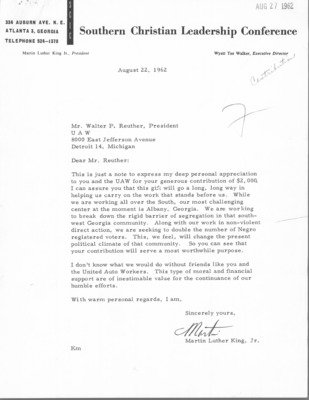
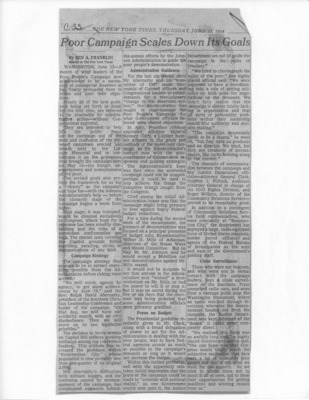
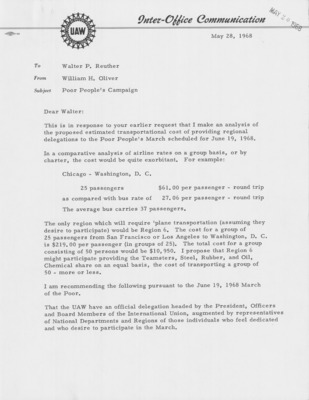
Publications; Correspondence and Clippings
Item
- Title
- Description
- Date
- extracted text
-
Publications; Correspondence and Clippings
-
box: 569
folder: 7
-
1954 to 1958
-
Peaceful
Atomic
Uses
of
Energy
As an Instrument
in International
Relations
RosBert
by
McKINNEY
Editor and Publisher, Santa Fe New Mexican
Chairman, Citizens’ Panel which reported
to the Joint Congressional Committee on
Atomic Energy on the Impact of the
Peaceful Uses of Atomic Energy
PEACEFUL
;
|
USES
OF ATOMIC ENERGY
AS AN INSTRUMENT IN
INTERNATIONAL RELATIONS
from
REMARKS
ON AN ATOMIC
DEMONSTRATION
POWER
PROGRAM
ABROAD
by
Rosert
McKINNEY
to
THE
OVERSEAS
Press
CLUB
New York, New York
May 17, 1956
and
to
THE JoInNtT COMMITTEE
ON ATOMIC
ENERGY
Congress of the United States
Washington,
D. C.
May 28, 1956
Additional copies
upon request to:
available
THE NEW
MEXICAN
BOX 2100
SANTA FE, N. M.
|
The Argument:
Military aid, conventional economic and technical aid, are no longer adequate instruments in
international relations. New ways and means must
be found to meet the Soviet threat.
The peaceful uses of atomic energy can make
ed
st
re
ar
d
an
th
ow
gr
y
th
al
he
n
ee
tw
be
ce
en
the differ
s
on
gi
re
rt
ho
-s
gy
er
en
,
rt
ho
-s
el
fu
the
in
t
developmen
d.
de
ci
de
be
l
wil
ip
sh
er
ad
le
d
rl
wo
e
er
abroad, wh
for
ed
ne
st
mo
e
th
ve
ha
h
ic
wh
s
on
gi
re
Yet these
of
ce
an
ch
st
lea
the
ve
ha
w
no
es
us
ic
om
peaceful at
e
id
ov
pr
t
no
do
we
If
.
es
lv
se
em
th
by
em
getting th
opr
ce
an
st
si
as
ic
om
at
d
oa
br
A
l.
wil
rs
he
them, ot
cru
st
r
ou
of
rt
pa
al
gr
te
in
an
de
ma
be
st
mu
gram
ture of international relations.
st
mu
es
at
St
ed
it
Un
the
,
ip
sh
er
ad
le
r
ou
ep
ke
To
ly
al
ci
pe
s
—e
gy
er
en
ic
om
at
of
s
ce
ur
so
re
e
th
p
lo
ve
de
t
no
es
do
y
nc
ge
ur
is
Th
.
ty
ri
io
pr
gh
hi
at
power—
nco
of
ge
ta
or
sh
ic
st
me
do
t
en
es
pr
y
an
om
fr
derive
ed
ne
y
an
om
fr
or
r,
we
po
ic
tr
ec
el
or
ventional fuels
ok
lo
to
ly
mp
si
ts
an
pl
r
we
po
of
lot
a
at home for
at, brag about and subsidize.
Atomic power costs more today than convents
cos
ng
bri
To
.
tes
Sta
ed
it
Un
the
in
r
tional powe
down, “demonstration” plants must be built. We
e
Th
m.
ra
og
pr
”
on
ti
ra
st
on
em
“d
ic
st
me
do
have a
,
nts
pla
n
io
at
tr
ns
mo
de
al
on
ti
di
ad
ld
bui
to
places
al
on
ti
en
nv
co
e
er
wh
ad
ro
ab
s
on
gi
re
se
tho
in
is
now,
1s
r
we
po
ic
om
at
e
er
wh
d
an
t
cos
gh
hi
is
r
powe
most likely to pay tts own way.
An International Atomic Power Demonstration
Program would salvage at moderate cost the
d
ul
wo
,
aid
n
ig
re
fo
in
ed
st
ve
in
ve
ha
billions we
e
id
ov
pr
d
ul
wo
d
an
,
at
re
th
et
vi
So
the
et
help me
arel
l
na
io
at
rn
te
in
in
nt
me
ru
st
in
w
ne
ul
the powerf
ks.
see
w
no
es
at
St
ed
it
Un
the
h
ic
tions wh
Peaceful Uses of Atomic Energy
as an Instrument
in International Relations
Recently I had the privilege of hearing the
President deliver his foreign policy address to the
American Society of Newspaper Editors. In this
address, the President proposed the establishment
of a non-partisan citizens’ commission to review
our international policies and to recommend additional ways and means of meeting the new aspects
of the Soviet threat.
The various Administrative agencies and Congressional committees concerned have likewise been
giving deep study to the many facets of this grave
problem — as have all those in private life to
whom other cares seem trivial when considered
in the light of America’s changing place in the
changing world.
Mr. Eisenhower made specific point that any
person who sees or believes he sees some of the
basic factors in the problems facing the nation
and who has some little ability or opportunity to
explain them to others, has the responsibility to
do so.
The President’s statement started me thinking
about how the study of the peaceful uses of atomic
energy, made by our Citizens’ Panel for the Joint
Congressional Committee on Atomic Energy, could
be brought to bear to help suggest additional ways
and means to meet the Soviet threat.
In our international chapter, the Panel on the
Impact of the Peaceful Uses of Atomic Energy
reported that:
“The humanitarian applications of atomic energy
can make significant contributions to the health and
prosperity of peoples throughout the world...
“Atomic power may be the most tangible symbol
of America’s will to peace through the peaceful
atom. Our domestic needs cannot be our only motivation. Otherwise, we leave without effective rebuttal
the argument that America is so rich, so prosperous
that a revolutionary new energy resource can emerge
One
without any urgent
man’s use. This must
to peoples possessing
technical capabilities
need on
seem a
neither
to put
our part to put it to
strange position indeed
conventional fuels nor
the atom to work.
“If we fail to act to bring atomic power to the
free world, other countries will do so ahead of us, or
progress will proceed at a slower pace.
“Peaceful uses of atomic energy will inevitably
be developed throughout the world. The United
States
must
lead.”
The Problem
The Soviet threat, of course, does not arise from
any scarcity of electric power in the United States,
nor from the possibility that atomic electric power
may soon be generated in quantity in Russia.
The problem is not a present shortage in the
United States of energy resources.
I believe the real problem is:
HOW CAN WE PUT A STOP TO DETERIORATION OF AMERICA’S POSITION OF
HOW CAN
LEADERSHIP ABROAD?—AND
WE
RESTORE
THE
FAITH
THAT
THE
REST OF THE WORLD ONLY RECENTLY
PLACED IN THE UNITED STATES AS A
SYMBOL, NOT ONLY OF MATERIAL, BUT
ALSO OF MORAL PROGRESS?
I believe that this deterioration can be stopped,
this faith restored through the peaceful uses of
atomic energy. I firmly believe this for one fundamental reason. The reason is that the peaceful
uses of atomic energy have completely captured
the imaginations of the peoples of the world.
And this fact leads to two basic propositions:
The first proposition is this: That the peaceful
development of atomic energy gives the United
States an opportunity such as we never had before
to win respect, goodwill and friendship throughout the world.
The second proposition is: That we must grasp
this opportunity now—and by now I mean immediately—because we will never have it again.
These are pretty broad statements. But to me
they are the only conclusions which can logically
flow from the demonstrable facts.
For the first of these “demonstrable facts,” let us
Two
look at where the United States stands today in
relation to the uncommitted nations of the world.
In Ceylon an election is held and it is assumed
that the government earnestly friendly to the
United States will be re-elected. But this government is soundly beaten by an opposition which
says that, because it is anti-colonial, it must therefore be anti-American. Coming elections in Iceland, Nepal and elsewhere seem to be shaping up
the same way.
In the Middle East we painfully build a structure of military alliances shored up with conventional military and economic aid, along the
so-called Northern Tier, feeling sure that the
Arab region to the South is safe. Suddenly we find
the Arab nations turning against us, and the
balance of power in the area tipping toward
Russia.
America is learning the hard way that the expensively and painfully won goodwill of governments lasts no longer than the governments
themselves last. Only rarely does it carry over to
the people.
This is true not only of former colonial countries now going through the growth pains of
national, political and economic independence.
It is true also of many established, industrialized
nations.
It is true of countries with which we have
formed defensive alliances and to which we have
given billions in military aid. It is true of nations
to which we have given billions in economic aid.
It is a fact which has become increasingly clear in
just the last few months since the Russians made
a scapegoat instead of a saint out of Stalin, turned
the guillotine into a maypole, and put on the
market their new tactic of Soviet service with a
Soviet smile.
A New
Element
So the first demonstrable fact which I would
like to discuss is this: We need some other element—something besides defense alliances and
military aid, something besides conventional technical and economic assistance. We need it to
convince the peoples of the world, as well as their
leaders, of what we have been trying for the last
Three
decade but so far have failed to convince them
of—that the United States is truly their friend
and deserves their respect and trust.
The second demonstrable fact is that the peaceful uses of atomic energy can provide the new
element, the new ways and means we need. But
the whole subject of atomic energy is one which
to most Americans is a kind of hazy, indistinct
Land of Pie in the Sky and Wishful Thinking.
Permit me to tell you why I think the peaceful
uses of atomic energy have such a great potential
as an instrument in international relations.
A year ago I had a call from my neighbor,
Senator
Clinton
P.
Anderson,
chairman
of
the
Joint Congressional Committee on Atomic Energy.
He asked me to take the chairmanship of a nonpartisan, nine-man citizens’ panel which was to
look into the progress being made in peaceful
atomic uses, and was to measure their impact on
the nation and world.
Although I did not realize it at the time, when
I took this job I was getting the opportunity for
an education so broad, so intense that it has
amounted almost to a revelation.
Now, I am not trying to set up as an atomic
authority after a nine-months course. But the
work of the panel brought to bear the cumulative
thinking of several hundred authoritative individuals and organizations in close to a hundred
special studies.
From our research study group, led by Nobel
prize winner, Dr. I. I. Rabi—to our medical study
led by the eminent authority on atomic medicine,
Dr. Shield Warren—to our agricultural study led
by the Undersecretary of Agriculture, True D.
Morse—to our power study composed of forty
outstanding authorities in all forms of energy—we
tried to bring to bear the collective knowledge of
the whole nation on the probable impact of the
peaceful uses of atomic energy at home and
abroad.
Quiet Revolutions
Here are just a few of the highlights of peaceful atomic uses that these experts brought out:
Atomic electric power is here. But it will not be
until the third or some subsequent generation of
Four
atomic power plants that atomic power will be
broadly competitive in the United States.
In agriculture, new plant strains have already
been developed through atomic radiation—barley,
oats, wheat, corn and peanuts—to name just a few.
These new strains yield more, are better adapted
to mechanical harvesting, and better able to resist
drought, bad soil, pests and diseases. One of the
most damaging pests to cattle raisers—the screwworm fly—has been eradicated from an entire
Caribbean island in a test of a new atomic radiation
technique.
Hundreds of atomic applications are working
quiet revolutions in almost every phase of American
industry.
In medicine, two radioactive isotopes are now
accepted pharmaceuticals—fifty thousand patients
have already been treated with radio-isotopes—
and half a million others have been given atomic
medical diagnosis.
Atomic food preservation has been brought to
the point where irradiated foods are being tested
on human beings.
Although there are many other examples, these
early accomplishments only scratch the surface.
Agricultural researchers foresee the day when we
can tailor-make plants for specific growing conditions in specific regions; when we can breed color
and taste and size into our food products to
suit consumer preferences; when we may understand the mysterious process of photosynthesis by
which plants make proteins and carbohydrates.
Within one or two decades, a large part of our
ocean-going tanker and ore-carrier fleets may be
running on atomic power.
Within twenty-five years we may be producing
more electricity in this country in atomic power
plants than we produce today from coal, oil and
falling water.
These predictions may sound fantastic, but they
do not come from Sunday supplement writers.
They are conservative forecasts by hardtheaded
men.
And I have been careful in relaying these
things to you not to inject into them the coloring
of my own enthusiasm.
As the panel’s study progressed, I came to
recognize a tremendously important facet of this
Five
complex subject of atomic energy which so far
has received little attention.
This facet is that it is precisely those countries
which have the most need for peaceful atomic
uses now that have the least chance of getting
them by themselves any time soon.
Let me be specific. Atomic techniques can
make farming productive in many areas where
today it is either impossible or, at best, marginal.
In the United States farm surpluses are serious
problems. Atomic techniques which would add to
these surpluses are certainly not essential. But in
many other countries, in North Africa, Egypt,
India and the Far East—hunger—the stomach
instead of the head—is the only influence which
motivates hundreds of millions of people.
A New Hunger
There is another kind of hunger—the hunger
of nations for fuel and power, the hunger which
comes from not having enough energy resources.
We in America have never felt that hunger. Even
without atomic energy, we will not run out of coal
or oil in our lifetimes.
One of the useful by-products of the Panel
report was to put our reserves of conventional
fuels in their true light. A panel study group,
headed by Wallace E. Pratt, and working from
new data provided in confidence by twenty-eight
leading oil companies, put together an estimate
of domestic and world crude petroleum reserves
which has had revolutionary impact not only on
thinking in the oil industry, but in the chanceries
of the great powers.
The previous best estimate of proved domestic
crude petroleum reserves was 29 billion barrels;
our Panel report increased the figure to 35 billion.
As for proved reserves in the Middle East, the
previous best estimate was 97 billion barrels. Our
Panel report—and I believe it realistic and hardheaded—put proved Middle East reserves at 230
billion barrels.
As for coal, we found that domestic reserves,
recoverable at or near present costs, equated out
to around 500 years’ supply at present rates of
consumption.
Other countries of the world are less fortunate,
Six
however. The same coal which costs utility plants
$8 a ton in U. S. industrial centers, costs $22 a
ton or more
delivered abroad.
Yet so fuel-short,
so energy-short are other countries that English,
Italian and German industrialists—to name only
a few—are over here trying to make five and
seven year contracts for this $22 a ton coal in
quantity.
It is in the fuel-short, energy-hungry economies
of these other countries—some already highly industrialized and some in process of industrialization—that atomic energy can make the difference between healthy growth and arrested development.
The Challenge
Right here is the crux of what I would like to
say. It is in this imbalance that I see our challenge
and our opportunity. We in this country are some-
times
prone
indifferent, sometimes hostile, sometimes
to misuse to lesser ends the promise that
atomic energy holds. But to the rest of the world,
atomic energy looms in magnified perspective because it is the only real chance for a good life in
this generation.
Whenever the United States drops some hint
that we are ready to give atomic aid, the world
response has surprised even those few Americans
who fully appreciate the power and scope of
peaceful atomic uses.
There was initially such a response to President
Eisenhower’s Atoms-for-Peace Plan, announced
over two years ago. There was such a wave of
enthusiasm when the United States pulled back
the curtain of atomic secrecy a little bit at last
summer’s Geneva atomic conference.
And yet
what concrete steps have we taken?
These waves of enthusiasm show a basic fact
about atomic energy. It is not just one more
medium of economic aid or technical assistance—
we can keep on giving conventional aid at the cost
of billions, without lasting effect.
Today the United States is the most advanced
nation in the development of peaceful atomic
uses. But we have learned once before, to our
regret, that any lead in the atomic race can be a
transient thing. There is no law that the nations
Seven
of the world must always come to us for atomic
knowledge and equipment. On the contrary, there
is an inexorable law of human nature that if men
want something badly enough, they will go get it
wherever they can. And we can be certain, with
the new Soviet tactic of service with a smile, that
it will not be too long before the whole range
of peaceful atomic applications will be made available by Russia, even if not by us.
This leaves us with only one course of intelligent
action —- we must make a broad atomic assistance
program an integral part of our international
only answer is No. The time has come
thinking solely about what atomic energy
to the world. We must think also about
can do for the world.
At the present stage of world atomic
‘Secrecy
Why, then, when we have been spending billions
in economic aid abroad, have we been so backward
with the most advanced, the most dramatic—even
perhaps the cheapest—form of foreign aid?
The reason is one word, “security.” We have
been afraid that other nations might misuse the
information and the materials we would give
them. As a result of this fear, we have tied the
hands of our government and our private businessmen with secrecy restrictions.
We cannot quote abroad the actual prices of
atomic fuels. We are afraid that these prices might
reveal our rate of weapons material production.
Yet, without knowing these prices, no nation can
come to its own conclusions as to its own economics
of atomic power.
Some reactor technology we can disclose to
foreign nations, but we cannot tell them whether
it is the latest available. Thus, a foreign nation
cannot tell whether atomic equipment it might
get from us has been obsolete for years.
Under our secrecy restrictions foreign scientists
and engineers, studying in our atomic facilities,
can have access only to information which has
been thoroughly declassified. Our newspapers are
not able to give the real picture of the state of
our atomic technology. All down the line, secrecy
restrictions prevent us from dealing frankly and
openly in peaceful atomic uses.
really “security”?
A Million Kilowatts Abroad
The nine members of our Citizens’ Panel all
felt that one of our most important conclusions
was the need for immediate affirmative action in
eee
the field of peaceful atomic developments abroad.
We recommended that the United States furnish
nuclear fuels, give technological assistance, and
permit contracts for the installation of at least
one million kilowatts of atomic electric generating
capacity outside the United States as soon as
possible—we hoped by 1960.
These recommendations we presented to the
Joint Congressional Committee January 30th. On
February 23rd, President Eisenhower set aside
20,000 kilograms of nuclear fuel for use abroad.
My own rough calculations, based on assumptions
including material grade and reactor type, indicate
some measure of equivalence between the Presi-
To me the
Eight
=
But is “secrecy”
develop-
ment, the degree of risk involved is small—particularly because I do not call for any total
disclosure in all categories of atomic information.
I ask only that atomic electric power technology
be shared with other nations. Specific military
applications of this technology we should continue
to keep secret.
Whatever risk we might run by bringing this
information to bear for peaceful uses throughout
the world would be infinitely smaller than the
risk involved in our losing world leadership. On
letting down these bars of secrecy, the road is
clear for making the peaceful uses of atomic
energy an important instrument in our international relations.
relations.
But Not ‘Security
to stop
can do
what it
dent’s 20,000 kilograms and the Panel’s one million
kilowatt goal.
But just making fissionable material available
does not build reactors. Two years ago, the
United States set aside 200 kilograms of nuclear
fuel for research reactors to be built abroad. Yet
today only one research reactor fueled with
American nuclear fuel is in operation on foreign
Nine
in technical manpower and facilities for a
crash program.
soil—the one we built for the Geneva Atomic
Conference and later sold to Switzerland.
Here’s How
I would like to propose a way for us to go
about getting atomic power reactors built abroad.
To make my proposal clear, let us first look at
how we are doing it at home.
We now have under way in this country what
we call a power reactor demonstration program,
being financed jointly by business and government.
As part of this program, 7 plants totalling between
800,000 and one million kilowatts of electric power
capacity will probably be finished by 1962. The
total cost to the Government and participating
private business groups will be in the neighborhood of 300 to 350 million dollars.
There are some who feel that this domestic
atomic power demonstration program is lagging
and that a crash program is required lest the United
States “lose the atomic power race.” In that connection, hearings are currently going forward before the Joint Congressional Committee on Atomic
Energy to determine whether, in effect, the present
domestic demonstration program should be doubled
by directing the Atomic Energy Commission to
build, with public funds, six more nuclear power
demonstration plants, in different geographical
sections of the United States, over and above and
in addition to the reactor development program
now being carried out by the Commission.
Consideration of the proposal outlined in the
“Gore Bill”—Senate Bill 2725—calls for three different determinations:
(1)
Whether the present demonstration program is in fact lagging, and, if so, in what
respect lagging.
(2)
Whether additional demonstration plants
would serve any useful purpose; if so,
what purpose; and, if built, where they
should be built.
(3)
Whether enlargement of the demonstration program should be on a “crash”
basis; and, if so, what are our capabilities
Ten
The nation is now looking to the statesmen on
the Joint Committee to establish the real facts,
to measure the real needs, and determine the best
means whereby the peaceful uses of atomic energy
in general, and atomic power in particular, can
be brought most efficiently and beneficially to the
United States and the world.
I am confident that the Joint Committee will
keep the scientific, engineering and technical problem of harnessing the atom separate from unrelated
political controversies.
The Present Program
Our Panel had this to say of the
Atomic Power Demonstration Program:
Domestic
“For the growth of any nuclear power generating
capability to occur in the United States, it must be firmly
based on technological knowledge, and in engineering
and operating experience.
The required technological,
engineering, and operating data can come only from
research, development, and construction of plants of
experimental, pilot and full-scale size. This takes time.
New accomplishments in fuel fabrication and reprocessing, as well as in the broad fields of chemistry, metallurgy
and physics are required. Experience of the past 5
years makes it clear that such developments can only be
accomplished in an orderly way. Frequently they hold
little immediate promise for private profitability, since
there are as yet no markets in which such developments
can be exploited. This is the fundamental reason why
Government has had to bear the initial responsibility for
exploration of this potential resource. As the day draws
closer when economic feasibility can be foreseen, industry
has indicated an ever-increasing willingness to assume
a share of the responsibility.
“Impact from atomic power can come from exploring
this field technologically, as well as from its commercial
application. Thus two different determinations, as yet
not clearly embodied in Government policy, must be
made as to the urgency of getting on with atomic power.
The first relates to the need for or desirability of technological development of atomic energy as a power resource;
the second, related to the first, involves the rate at which
this resource should be commercially developed.
“The prospect of an indefinitely expanding national
economy which may require as much as 600 million kiloEleven
watts of installed electric-generating capacity or more by
1980 makes it clear that the Commission must explore this
nuclear resource by a continuous program as promptly
and efficiently as possible. In doing so it will be necessary
not only to build pilot or experimental nuclear plants,
but also full-scale “demonstration” atomic power plants
of each new and promising major reactor size and type.
These are essential to permit development of the kind
of engineering and operating data required for any intelligent decision as to how this particular resource can best
serve the nation.
“Private enterprise should carry a substantial part of
the burden of research and development, including construction and operation of full-scale ‘“‘demonstration”
plants. By “demonstration” we mean providing experimental and engineering data from which economic feasibility can be deduced reasonably. Where private enterprise does not assume the risk, we believe that the
Commission should support expeditious development, if
necessary, even up to and including construction of one
“demonstration” plant of each major reactor size and
type with public funds. In any event, we believe that
continuing responsibility should rest with the Commission
to encourage, and, where necessary, support basic research and development in this field .. .
“The “Demonstration” plants now underway are exclusively large—over 60,000 kilowatt-plants. Taken together, they constitute an orderly and sound exploration
of atomic energy as a power resource for large integrated
electric utility systems in mature industrial economies.
“An invitation has been extended by the Commission
for proposals for small to medium-sized atomic-power
“demonstration” plants. Such plants, on becoming economically competitive, could constitute especially suitable
power sources in the United States for small, non-integrated or rural utility systems, and for single or remote
industrial or mining power users. As a type, they would be
far more suitable in many foreign markets than largersized nuclear plants.
“We recognize that small and medium-sized atomic
power plants were thought less likely to be economically
competitive at an early date, for technical reasons. The
importance of such plants, however, on the international
scene—as well as on the domestic—and the opportunity
which they afford for a bold demonstration of United
States technological leadership give their development a
high sense of urgency. The present development program
is therefore deficient to the extent that appropriate
“demonstrations” of the small and medium-sized types
are not now
underway.”
That much
we said in the Panel Report.
Twelve
The New Program
Now I would like to go beyond that Report and
make a new recommendation, based on my own
personal opinion as one private citizen.
Because there is no domestic shortage of fuels—
because there is no domestic demand for electric
energy that present conventional power plants cannot supply much more cheaply, there is no urgency
to duplicate in the United States reactors of those
types and sizes now proposed for demonstration.
I believe that there is a real urgency. It does
not arise, however, from any need to have a lot
of atomic power plants simply to look at, brag
about and subsidize.
The paramount urgency for pressing forward
with an enlarged atomic power demonstration program only stems from the need for the United
States to lead in bringing atomic power to the
fuel-short energy-short regions of the world—
regions in which the whole issue of our world
leadership will be decided.
And more specifically, I must emphasize that
these regions abroad are the places where atomic
power is most likely to pay its own way now, and,
therefore, where atomic plants should be built now.
I have said “most likely to pay their own way”
because none of the experts we worked with could
say with any certainty what would be the actual
cost of generating power in the first generation
of plants now under design. Clearly, they cannot
tell costs of the second generation of plants not
yet conceived. Each of these experts, of course,
can project detailed estimated costs of any particular plant design. But when you look at these
calculations, you find they depend on many assumptions as to fuel, operating, maintenance and capital
costs. Inherent in these assumptions are broad
uncertainties which reflect the optimism or pessimism of whoever is using the slide-rule. These
uncertainties introduce into the sum total of these
estimates errors large enough to offset any differentials which would result from tax-free operation
or the reduced “amortization” rates of governmentowned plants. From this I have concluded that,
in this country, demonstration plants constructed
completely at government expense will involve two
new burdens on all the taxpayers of the nation:
Thirteen
(1)
Heavy initial outlays of capital to build
plants which can never be amortized, and
(2)
Continuing outlays to subsidize deficit
operations, continuing and perhaps increasing over the 20 to 40 years’ opera-
tional life of the plant.
Abroad, however, where much higher power
costs exist, present utility rate levels can come
much closer to covering nuclear plant operating
costs and to amortizing construction costs; and I
believe this to be subject to substantial proof without resorting to wildly optimistic assumptions.
Therefore,
the
new
recommendation
I would
like to make is this: that our national interests
would be better served by the United States, together with those countries needing atomic power
now, moving forward at once with an International
Atomic Power Demonstration Program.
I mean a new demonstration program, expanding beyond the one currently getting underway in
the United States. I mean a program providing
foreign countries—not only with the latest technology—but also with designs which we may not
even contemplate for use in this country. The
crucial point to remember here is that our economic
needs in the United States are different from those
of foreign countries—and so our domestic reactors
may be differently conceived. That is why we need
a new, a second demonstration program, overseas.
This new program should be for the construction
abroad of one atomic plant of each major type and
appropriate size to be demonstrated in the United
States, as well as other designs particularly adaptable to the needs of specific foreign regions.
The Cost
Let’s look at the cost of such an International
Atomic Power Demonstration Program.
Our domestic demonstration program, including
development expenses on the specific projects in-
volved,
will cost
300
to 350
million
dollars. An
international program of the same magnitude—
that is, close to 1 million kilowatts by 1960—will
probably cost about the same; higher foreign construction costs would be offset by the fact that
development costs would be minimal.
Fourteen
This may sound like a lot of money, but our
military and economic credits to Yugoslavia alone
in the past 8 years total one billion dollars.
The Administration has asked for a foreign aid
appropriation of 4 billion 900 million dollars for
the coming fiscal year. Compared to this, the cost
of an International Atomic Power Demonstration
Program over five years would be small—even in
the unlikely event that the United States Government would bear the whole cost and without any
reimbursement. Yet this program could salvage,
it would make dynamic and productive our 50
billion dollar investment in foreign aid programs,
military, economic and technical. It could serve
as the keystone for a new and effective structure
of international policy.
By an international demonstration program, as
I propose, we would certainly gain as much technological and economic information as we would get
from an enlarged domestic program. Obviously,
by doubling the number of plants of each type
under demonstration we would increase only
moderately the usefulness of the program in advancing reactor technology and in speeding competitive atomic power. Certainly we would by no
means double the technological value of the pro-
gram.
New Pride, New Hope
But in addition to and more important than
technological data, the international program
would prove to the world that we are vigorously
moving forward to help those in need; that we
are giving them our latest developments, not our
cast-off designs; and that world-wide application
of peaceful uses of atomic energy are not being
held back because our own needs for fuel, energy
and food are not as pressing as in other nations.
To Japan, the Philippines, Thailand, Pakistan,
India, Turkey, to countries in Africa, Western
Europe, and Latin America, atomic power demonstration plants can mean many things. They can
spell new hope for economic growth. They can be
a symbol of cooperative effort which can dramatically demonstrate that there are more constructive
relations possible between countries than uneasy
co-existence or armed truces. Certainly they could
Fifteen
do more good than any number of cease-fire agreements. They could offer to other nations the immense pride of taking part with the United States
as co-partners in the most inspiring challenge of
our times—the conquest of the atom.
A 10,000 kilowatt atomic power plant can go
further in capturing the imagination of people
around the world than a 100,000 kilowatt conven-
tional plant costing many times more. It would
be especially fitting, as a start, to build one in
Liberia, that democracy which sprang out of our
own founding principles.
With atomic energy, cost and size are not the
criteria by which gratitude of other nations is
measured. The measure is the pride it breeds in
the minds of men for the present, and the hope it
breeds for the future.
Specific Steps
Now, I would like to conclude by suggesting
some remaining specific steps to be taken to bring
a one million kilowatt International Atomic Power
Demonstration Program into being by 1960.
First, I would recommend that the United
States call a series of regional technical meetings,
to be held as soon as possible, on the peaceful
uses of atomic energy.
These would not be
presentation of formal
should be designed to
generalizations that so
accomplishment. Their
“talk” meetings for the
papers.
Their agendas
cut through the fog of
often prevents concrete
purpose would be to get
down to the brass tacks of the who, what, when,
where and how of applying atomic energy to the
specific countries and regions involved.
Secondly,
I would
recommend
that these
regional meetings establish definite goals for research, development and practical application of
atomic energy in three fields: electrical generation,
medicine and agriculture. Other fields of atomic
promise can wait, for the present.
Third, information now classified by the U. $.—
such as, for example, reactor technology and fuel
prices—should be made available to participating
countries.
Sixteen
Fourth,
I
recommend
would
that
the
entire
program be conducted under the auspices of the
Atomic Energy Commission, which is best equipped
to handle so technical an undertaking.
By giving the job to our engineers and scientists,
backed by our industrial strength, we would convince the world that we are not using these
humanitarian and economic tools cynically, as
poker chips of power diplomacy, as does Russia.
The
Goal
Our goal should be to bring friendly nations,
and those whom we would like to be our friends,
to the point where they can make sound decisions
for themselves on the use of the new resources of
atomic energy for social and economic progress.
At the same time, we must help them acquire the
physical means for carrying out these decisions.
We must encourage in every way development
of local scientific and technical talent, so that
eventually their research reactors, power reactors,
hospital, farm and university atomic laboratories
will be operated by their own people. The local
self-respect and self-sufficiency which will come
from harnessing this new resource may end the
present state of ferment and unrest in many parts
of the world, where hopeless poverty and frustration now force national leaders into irresponsible
positions against their own and the world’s best
interests.
It was in the United States that the first controlled nuclear chain reaction was achieved. It is
in the United States that the greatest progress has
been made toward harnessing this fundamental
discovery. After having come so far in our development of the peaceful uses, we cannot now abdicate and let others bring them to mankind.
The Atomic Energy Commission must be given
vigorous support in the steps it is already taking
and in the news steps it should take to carry out
the augmented program I have here tried to outline.
Otherwise,
all
this
Administration’s
fine
promises since America first used the phrase
“‘Atoms-for-Peace” will have gone only to make
headlines and consume newsprint. At our own
invitation, the world will judge us as to whether
Seventeen
ie
TTT
spe
‘“‘Atoms-for-Peace” was an advertising program
without a product.
In atomic energy, the United States must meet,
first, these crucial problems that face us—the international ones—and then go on in seeking the
solution of our longer range domestic fuel and
energy needs.
We must not forget, nor let the world forget,
that every kilogram of nuclear fuel we send abroad
for peaceful purposes can be one less kilogram
available for war. If we move forward immediately
on an International Atomic Power Demonstration
Program, we place before the world, our challenge
to the Communists to practice, not just preach,
atomic disarmament.
Copies of the Report of the Panel on the
of the Peaceful Uses of Atomic EnInga
ergy, referred to herein, may be obtained
from the Superintendent of Documents,
Government Printing Office, Washington, D.
C. Vol. 1, findings, conclusions and recom155 p.p., 45¢. Vol. 2, backmendations,
ground material, 749 P. p., $2.00.
An unofficial digest of Vol. 1 of the Report,
written in nontechnical language, may be
obtained without charge by writing to Frank
M. Folsom, President, Radio Corporation of
America, 30 Rockefeller Plaza, New York 20,
New York.
Eighteen
OCT 25 1985
Date Qet, 20, 1955
To
Walter
From
Paul
Subject
Dear
“The
P,
Reuther
Sifton
Point
of
No Return’in
Exclusive
Reliance
on Nuclear
Warfare
Walter:
Attached hereto, for possible use in discussion during or before the CIO
and
later AFL-CIO conventions-~ and perhaps elsewhere-- are three
quotations bearing
on the above subject;
1.
An excerpt from Chinese Nationalist Ambassador Wellington
Koo's interview
on the "Youth Wants to Know' program, May 2z
955
a whic
sked
:
the question on the use of atomic weapons in the defense of
Quemoy and Matsu as
"a very grave question."
(The complete printed text of the entire program is at-
tached.)
Although
the printed
text does not show it
so strongly,
sight and sound made it clear that the Ambassador understo
od
asked whether or not he recommended dropping the atom
ic bomb
land or coming therefrom,
fense,
ce
General
3
Marked
etc,
Omar
Bradley's
passages
bearing
in
on the
statement
the
1955
point
o
containing
the
UAW=CLO Convention
nuclear warfare,
the television
that he was being
on Chinese on the
Sentence.
Resolution
|
"Ours
on
is
Main-
a world
National De-
Of course, in recent months foreign policy and internationa
l conferences seem
to have been conducted on an international acceptance of
the impracticability of
war but this assumption has largely been based on acc
eptance of the contention
amy get a "bigger bang for a buck" by the use of nuclear
weapons and, anyway,
any
war, however small, is apt either to require the use of
nuclear weapons at the
beginning or will mushroom into a big and probably global w
ar requiring the use of
the ultimate
weapon.
|
|
Ridgwayts point that land forced and weapons short of nuclear
equipment are still
valid,and the other point made in our resolution regardin
g the possibility of having
to fight limited wars with weapons other than nuclear, may
still have validity.
Bu
t
a worsening of international tensions may again bring on
demands for resort to nuclear
warfare.
Anyway,
Sible use if
I thought you might
occasion develops,
|
PS:kh
Attachments
cc? Don Montgomery,
Frank Winn,
Nat Weinberg
like
to have
the
attached
bf
barf
Roy Reuther
Brendan Sexton
:
Paul Siftot
yours,
os
material
at hand
|
for
pos-
"A VERY
GRAVE
(From Youth Wants to Know
~
Koo, May 22, 1955)
QUESTION,"
Interview
with
KOO
SAYS WELLINGTON
Chinese
Ambassador
Nationalist
defend the
States,
Do you believe that your Government can
"Question:
Matsu Islands without the aid of the United
andoy
Quem
successfully?
timbassador Koo: We think we can and in the last
have greatly strengthened our defense on the island
of our
a very
troops, there, is pretty good, and they
strong fight to hold those islands,
are
Wellington
few weeks we
and the morale
to put up
going
"Question: And in the defense of the islands, do you suggest the
use Of
atomic
weapons?
"ambassador Koo: You
thinking of using them.
"Question:
weapons?
a
w
r
e
d
a
e
s
a
b
s
va
Would
Koo:
you
That
|
know,
like
we
for
don't
have
United
the
them,
so
States
we
use
to
e
O
e
h
t
o
t
is up
,
s
e
t
a
t
S
United
are
7
not
atomic
really,
It is
Inter-Office Communication
OCT 5 - 1956
Date
P.
October
4,
1956
Reuther
To
Walter
From
Donald Montgomery
Subject
Dear
am
Walter:
You asked for this editorial.
giving to John Martin.
Here
Best
is copy on Peace
which I
regards,
)
d
n
r
r
e
f
(
bon
Enclosure
DM:ml
©
OUTLINE ON PEACE
the
on
e
sag
mes
gn
pai
cam
or
maj
a
for
ns
tio
ges
sug
are
es
not
ing
The follow
subject of Peace,
similar in form to the Milwaukee
message on education.
One is to present a hard-hitting,
Two approaches to this subject are available.
decumented attack on how Eisenhower has weakened our alliances, caused
uncommitted nation to fear or distrust us, and given Russia rich opportunities
to present itself to the world as the champion of peace.
.
s
ion
dit
con
ary
ess
nec
the
ple
peo
an
ric
Ame
the
with
s
cus
dis
to
is
way
r
Anothe
of peace, showing them that we do not have peace today, but an armistice only,
and to involve and enlist them in the attitudes, policies and actions by which
our country and its people can exert their utmost efforts to the achievement of
peace.
If the American people will
firet method can have most
to be spared from political
the second approach will be
be aroused only by debate and conflict, then the
political effect. If, on the other hand, they hope
controversy on the subject of war or peace, then
more effective.
Even under this second approach, use must be made of the errors of Eisenhower
policy and performance, since no realistic picture of the world situation can be
drawn without it. But criticism of Eisenhower would be subordinated to the
major purposes of the address, which are (1) to tell our people the truth about
the gravity of the world crisis and our responsibilities with regard te it, (2) to
convince them that the proepect is hopeful if we adopt and vigorously prosecute
an affirmative program for achieving peace,
and whole-heartedly in that undertaking.
and (3) to enlist them personally
The notes which follow are based on the belief that a large majority of Americans
not only devoutly hope for peace and desire it, but are ready and indeed eager to
do something to win it. While they may be grateful to a President who assures
them that he, in person, embodies their hopes for peace, they will respond to
a candidate for the Presidency who respects them, who appeals te them as responsible citizens, and who asks them to share the national decisions and, when
necessary,
the sacrifices,
that will make our country effective in leading the
world to real and lasting peace.
Peace is not partisan.
an exclusive interest in peace.
family.
No nation,
no political party,
no individual has
The hope for peace is as large as the human
Ali of us know that war with today's weapons can destroy all that
—
ee
a
ee
See
ee
ee
ee
ee sats eee ee ee ae
ow
ee
oe
eee i ee
oe Oe ee
“er ee. .
ee.ss
ON
=
an aiae
ae
ee ee
a
ewe
78
is ee
—
human beings have achieved in 5,000 years,
ere
Tee
y= eaeee ee
ey a
e
ae
ee
ee
ee
ee
"
ee
we
perhaps the human race itself.
No shooting war is in progress today.
We are grateful that this is so.
.
ng
ti
oo
sh
of
e
nc
se
ab
the
n
tha
re
mo
is
e
But peac
much less than peace.
ee ee ee
What we have today is
It ia at best an uneasy armistice.
ind
co
l
ia
nt
se
es
the
d
te
ea
cr
ve
ha
we
en
wh
y
onl
e
ac
pe
l
rea
We shall have
tions of peace in the world.
And these conditions will not just happen.
They
.
ult
fic
dif
w
ho
er
tt
ma
y
no
gl
in
nt
le
re
un
d
ue
rs
pu
es
ci
li
po
d
must be built up by soun
Peace is not given to ue by Providence.
achievement,
of human effort.
It is the achievement,
the highest
Good feeling, good intentions are helpful, but
they alone are not enough; peace is the product of good works.
What are the essential conditions of peace?
One certainly is that the
power of great nations to wage war is neutralized by the assurance that resort
n.
sio
res
agg
of
tim
vic
the
as
h
muc
as
sor
res
agg
the
age
dam
will
end
the
in
to war
ical
polit
toa
means
a
as
cal
acti
impr
mes
beco
it
when
kely
War becomes unli
end.
Another condition is that the opinions of mankind,
of the most powerful peoples,
of the least as well as
be deemed so important by potential aggressors
that they prevail over national ambitions in the shaping of policy.
We do not have these conditions today.
‘Unity among the allies.of the western world is vital to achieving the
first of these two conditions of peace.
seriously weakened.
(NATO weakening,
The fact is that this unity has been
Ic sland telling us to vacate.
West
Germany and France alarmed by unaccountable rumors of reduction of our
military manpower and seriously discussing the unification of western Europe
as a sort of third force between the US and USSR.
on Suez, and the resulting disunity of the West.
Role of Eisenhower and Dulles
New York Times reporter
ee a
_—
oe
ee
ee
ee
a
ee
ee ee
ee
ee
ee
ee
ee
ee
eS
ee
ee ee
ee
ee
ee
ee
predicting that thie disunity will result in UN confirmation of the Egyptian
|
position at Suez.)
Compare this with the unity of the free world in earlier crises.
The
post-war threat of Communist infiltration and over-turn in western Europe
was boldly met and defeated by our Marshall Plan and the resulting strengthening
of democratic forces.
Russia's move to isolate Berlin from the West was defeated
by our Air Lift with the united support and applause of the free world.
threat to move
economic
to the Mediterranean was forestalled by Truman's
rehabilitation and military aid to Greece and Turkey.
acted at once to resist the Communist invasion of Sotth Korea,
Russia's
program
of
When Truman
we were
immediately supported by the UN Security Council and within 10 days 45 member
nations,
virtually the entire free world,
Council position,
had voted their endorsem ont of the
and many had pledged armed forces,
thus uniting the free world
behind the US purpose to resist and defeat this aggression, which was done.
How far the alliance of the western world has deteriorated in the last
few years is demonstrated by the votes of US newspaper editors at their (ASNE)
convention last April.
Polled on the question of the cold war, 54 said we were
losing it, only 27 said we were not losing.
but they were informed opinions,
These were,
to be sure, opinions,
and the opinions of a group not hostile to the
Pre cident.
Second,
on disarmament.
the conditions of world peace are not advanced by the stalemate
For the couvting of world opinion, Russia has advanced many
disarmament proposals,
siaiialineanad
know,
cynically aware of their impracticability.
But we have
staking everything on an aerial inspection proposal which we
or should know,
is inherently unacceptable behind the Iron Curtain.
es
aaee
te
ee eee
EE
EE EEE EO EEE
EEE
EEE EE Ee
(Repeat the proposal to end testing of H-bombs,
ee
ee ee ee
ee ee ee
eT ee
correcting and
rebuking Eisenhower's misrepresentation of it, stating again its self-enforcing
aspects,
and, above all, emphasizing the vital importance to world hopes of
taking this one,
first concrete step toward disarmament.
the curtain on atomic warfare.
We,
after all, raised
Se¢ shall begin to balance our account in world
opinion if we take the first step toward its elimination.)
Finally, and perhaps most img ortant, are the things we can do to
re-establish in the opinions of mankind the true picture of America as a land
and a peopiec truly dedicated to peace.
tions,
(Here again emphasize words,
inten-
good feelings are not enough; there must be works.)
At the head of the list here is the need to re-dedicate ourselves to the
American dream---the dream of political freedom which x hundred million
people have now made their own.
become their inspiration,
The words of our founding fathers have
but when they see us compromise
with colonialism
and make deale with dictators they have all too little reason to believe that
we still cherish the dream which they have borrowed from us.
again become a voice in the world,
America must
nat the voice of wealth and power
iter, but
the voice of free men speaking the hopes of humanity.
|
Next we should put the importance of really understanding the x hundred
million peoples of the uncommitted countries.
The greatest event,
the most
hopeful and inspiring fact in the world today is the fact that these x hundred
millions of people have come out of a past which held no hope for them and have
set up goals of political independence and economic advancement they are
determined to achieve.
We Americans must understand how much all of this wlorious new
ee
ee ae
Te
ee a
a
Te ee Se
revolution means,
ee
Ee ee
ae
ee
not only to them,
ee
ae
ee
ee
ee ey Ce eS Ne eee ee ee ee
but tous.
ae er
ee
eer ee
e
(There's a good quote on
this in the report to Congress this year by the Mansfield Subcommittee
on Technical Assistance and Related Programs.)
“The broader national interests of the United States require a
growth in the area of human freedom. It is perhaps significant that not
since 1812 has the United States found it necessary to fight a war with a
country which has standards of freedom comparable to our own. Steps
which countries receiving technical assistance take to promote such a
growth,
either politically or economically,
are in the matual interest of
the United States and of the other countries concerned.
the Subcommittee
This seems to
the most valuable mutual assistance which can reason-
ably be expected from most under-developed countries--namely,
a de-
votion to their own independence and a determination to work out their
own prodems. If we expect them to refuse to prostitute themselves to
the Soviet Union, we must also expect them to refuse to prostitute them-
selves to the United States. And we are false to our own traditions if
we ask them to do otherwise. A strong, free, and independent Asia ie
more important to the United States than a collection of weak dependents
in the sare area.“
Surely itis clear that we misread the meaning of this most important
fact of our day if we approach these people with propositions that we will help
them provided they become our military or ideological allies. It is a fatal misThey
understanding on our part to say that they must be for us or agai
are, and should be, devoting all their efforts to |
less past into a hoped-for future.
great wealth,
ab
nee of resources,
our embarrassment of surplus production,
understand, but we musttry.
free world,
We, with our
, themselves out of a hope-
our
may find this hard to
Because in a very large sense the future of the
the future of freedom in the world, depends on these people
ning
their struggle and winning it without surrendering to the false lures of Comn
Nor do we convince these x hundred million
people that we share their
aspirations when we prevail on them to enter into military pacts stretched
hopelessly
exposed along the frontiers of the Communist world.
(Develop here
CO
ai
Nai
Pe
i ett tia ltl
ee
ee
—
ee eae
ee ee
a
ee
ow
——
ee
7
ee
en
ee ee ee
1956.)
July 11,
d
te
it
mm
co
un
e
es
th
of
e
os
rp
pu
the
of
g
in
nd
ta
rs
de
Based on a right un
ce to us of their success,
grants,
loans,
,
e
c
n
a
t
s
i
s
s
a
l
a
c
i
techn
Despite the start they have made,
consumption,
widening.
become
economic aid programs,
ga
e
h
t
g
n
i
s
o
l
c
n
i
t
n
a
t
r
o
p
m
i
y
l
l
a
vit
food
the gap between their per capita income,
etc., and that of the advanced world is not closing, it is still
e
wis
a
and
men
low
fel
our
ard
tow
de
itu
att
us
ero
gen
the
in
aga
Here
attitude toward our own welfare coincide.
The Mansfield Subcom
mittee
was
right when it said it---
be
can
wth
gro
ic
nom
eco
g
lon
how
to
as
bts
dou
ve
gra
"hae
sustained in the United States if the rest of the world con-
h
wit
n
tio
nec
con
In
.
ind
beh
r
the
far
ond
r
the
fur
fall
to
tinnes
the advancement of our own prosperity,
the prosperity of
others is an important factor."
ow
all
not
will
t
tha
law
ic
nom
eco
e
abl
xor
ine
an
be
There may or may not
ld.
wor
the
of
t
res
the
of
e
far
wel
the
to
n
tio
por
pro
all
of
out
us to prosper
Cer-
t
efi
ben
ual
mut
and
n
gai
e
mor
be
can
re
the
t
tha
ted
tra
tainly it has been demons
y
the
n
whe
n
tha
s
rou
spe
pro
and
ing
anc
adv
are
y
the
n
whe
s
ion
nat
in trade between
are sick and declining.
Prosperity begets prosperity.
mm
co
d
rl
wo
e
th
at
th
re
su
be
n
ca
we
unity,
But apart from economic law,
the family of man,
ar
gl
e
th
ce
du
re
we
as
ly
r
on
go
vi
d
an
th
al
he
ll
e
fu
ev
hi
ac
ll
wi
ing injustices of opportunity that now divide us from
the world,
so many other peoples of
OE
EE
EE EEE
EEE EE
eee
a
ee
ee ee
ee eeee ee ee ee
eee ee
ee
ee
SUNFED
:
d
i
a
c
i
m
o
n
o
c
e
f
o
s
m
a
r
g
o
r
p
l
a
i
t
n
e
s
s
e
e
h
t
(Discuss
Se
ee ee ee
ee
ee
ee ae ee
to help
s
u
o
n
e
g
i
d
n
i
h
c
i
h
w
n
t
o
n
e
m
t
s
e
v
n
i
l
a
i
c
o
s
e
f
r
o
u
t
c
u
r
t
s
b
u
s
e
h
t
d
l
i
u
s
b
e
i
r
t
n
u
these co
nd
pa
ex
e
id
ov
pr
d
an
d
il
bu
to
n
gi
be
n
enterprise ca
Reuther ms., pp.
r
o
p
p
o
ment
‘t2v23 tie s---«gee
32-42; the use of our food surpluses as capital contributions
to development projects; what we might have done,
with help on the Aswan Dam,
for example,
to have brought awe horizons
in Egypt,
along
to the Arab world
and laid a basis for an affirmative Ameri can policy in the Near East.)
We must recapture the vision of the Marshall Plan and of Point Four.
The former achieved its purpose and was one of the grandest investments in
people and peace we ever made.
in size, and,
worse,
Point Four, however,
has been whit
in spirit, until it has become as often a messenger of
ill will and suspicion as of help and trust.
The way not to build foreign economic
aid on a firm foundation is to appoint to its administratio: A a person (Hollister)
whose whole philosophy and experience is hostile to the ideas and ideals which
give rise toit.
The way NOT to make our economic aid an instrument for
peace is to promise that we shall deal generously with disadvantaged peoples
when,
and only when, world
disarmament has been achieved,
‘This was
Eisenhower's first pronouncement as President on economic aid in April 1953,
also his latest pronow cement on the subject---the speech of September
How we offer our help is of first importance.
19.
Without sharing in the
basic purposes of the recipient countries to win a better life through democratic
means,
without understanding and respecting their independence and trusting
their good faith,
we cannot really take part in this great new thing that is
happening around the world.
eas
eee
ee
ee
But even at the maximum,
ee a a ee eas a eee ete
r
ou
of
on
ti
ac
fr
l
al
sm
a
ly
on
te
vo
de
l
il
st
d
we woul
NP
(See
And we could not find a wiser use of it.
national income to this purpose.
for 25 years, page 64.)
nomic program should operate
which,
after all, are in no sense charity since our own future is
80 vitally
s.
goal
their
g
evin
achi
in
s
trie
coun
r
othe
e
thes
of
ess
succ
the
with
up
bound
_
Furthermore,
U
e
th
h
ug
ro
th
d
an
th
wi
N on these programs,
rk
wo
we
en
wh
can invite the USSR to do likewise,
we
thus putting to the test whether its newly
expressed concern for underdeveloped countries is to advance them toward
e.
uenc
nist
infl
it
Comm
to
them
ert
subv
to
or
ncy,
icie
freedom and suff
(The intent of what is here suggested is to spell out an affirmative
appeal to work for,
not wait for, Peace---to make this the American people's
business and purpose,
not simply the hoped-for byproduct of a President's
on
ade
crus
ul
osef
purp
and
hard
high,
ina
us
ll
enro
to
e--smil
and
ss
line
kind
which the future of man on earth may indeed depend.)
PUTTING
None
aroused
United
hopes
Nations
role
constitution
"Atoms
of other
to produce
theory;
of the new
for Peace''is
countries,
with the
forge
A
we
are
atomic
are
by
not
morass
ideological
would
and
any of the private
tions
of Gordon
or
for Peace!!
before
the
Nations
to
when,
subscribe
It is a promise
to
that we
has been pledged
show
them
how
it can
cannot
for the
be
used
Authorized
of atomic
power
projects
Dean
and,
will
and Henry
years
in fact,
atomic
be built and
controversy
is
of ideologies,
and Britain
USSR
rest of the world.
is bogged
and directed by Congress
the Administration
of building
tested
program
energy
energy program
power,
down
in 1954
made
the
demonstration
full-scale
enterprise.
power
reactor
elapse
will
is actually under
before
any
assurance
to completion.
(See
Smyth.)
con-
of the present
is no firm
there
go through
D.
to the
atomic
our
that must
in this field while
of the atom
no full-scale
enterprise,
Our
of reactor
much
we know
irrelevant
nowhere
rest with private
two years,
produce
to
reactors
built.
not being
in which
own making.
struction by private
proposals
hearts
agency.
experiments;
decision that virtually the entire burden
after
more
will again be dramatized
prepared
a fruitless
to get on with the development
Now,
won
quantity
of U235
demonstration
result that the US is going
reactors
of ''Atoms
not a program.
small-scale
hog-tied
is of Eisenhower's
power
have
at the United
specified
ahead to bring the benefits
The
words
power.
conducting
center,
he appears
a slogan,
but
PEACE
of the atom
international
but the large-scale
dead
deedless
protagonist
to put theory into practice
on
FOR
1953.
Election Day,
electric
are
We
fine
in December
back up with performance.
use
TO WORK
than his proclamation
as peaceful
shortly before
the
ATOM
of Eisenhower's
more
His
THE
today that
attached
quota-
the
At
be
safeguard
the blending
It was
that gave America
special
the
it is one
the cause
puts
stall this rival
the
be
the
instance
is another
the atom
of us in making
reported to be going
an atom-power
shackles
development
promising
support
for our
imposed
of atomic
types.
of private
a practical
progress,
over
and
because
it
only
The
Seed
power
to fore-
hope
the field to development by
Fortune
and
own
hence
by AEC
power
AEC
power
given balloons,
reported
have
to
much
and
banners
Great Britain is already far
source
Western
rapidly.
of power.
European
Russia
countries
is reliably
have
scheduled
planned,
than is presently
greater
country.
Bill in the
Gore-Holifield
The
performance.
10 years
capacity
assured,
let alone
ahead
are
we
in which
of responsible
baloney in place
the
of peace.
case.
This
ahead
is that the private
Journal
Street
Wall
The
both
as
of the Nation.
foreclosing
while
of power
source
Government,
the cause
given a veto power
has
the AEC
to whom
panies,
to go further,
of its wilful misfeasance
explanation
plausible
above
enterprise
of private
It will take
for war.
refuses
AEC
types.
of the least promising
industry
and
construction by the Government,
is under
reactor
Yet only one power
can
job.
get on with the
for the purposes
atom
the
to harness
of each
contributions
to work
to put the atom
the know-how
for profit and
of Government
contributions
special
of the
and
and private,
both public
resources,
all our
marshal
to
great
too
Only bold initiative by Government
investments.
stockholders'
operate
must
which
industry,
on private
fairly imposed
are
risks
financial
the
of development,
state
present
84th Congress
by directing
by building
led the drive
companies
proposed
it to resume
leadership
us
from
in the
demonstration
reactors
to defeat this Bill,
with the
large-scale
in Congress
to release
and the coal industry.
of
it in our
exercise
atom
the
able
shall not be
We
other
to
how
learning,
to give
own behalf.
countries
contend
profit motive
behind
the blessings
of
He
enjoyed.
be
of beneficence
and the
motive
prophet
and neither
not
are
and
know,
not
The
his back.
within him,
for mastery
to
extended in a gesture
with one hand
helpless
hand bound
and his other
do
we
to bring
feasibly and economically
may
the United Nations
goes before
since
a mockery
is
blessings
those
promise
Eisenhower's
refuse
if we
peoples
to other
leadership
to
rise
will give
good works.
see
So we
we
must
unite
that all government
have
the
services
technicians
America
This
minds
at home
must
We
nations.
Ideological bickering,
for the new America.
leadership
pretense
once
demonstrated
have
regardless
opportunity
of men
and
of government
of their
and our
America,
who
to the age
of total terror.
atom the
obligation,
for the ineradicable
first unlocked
enterprise,
employment,
the
without
our
of man's
chance
to make
fact of history that it was
the atom
and introduced
we,
the peoples
and
of
genius
peaceful
of
can
we
of all scientists
enlist the true
servant
community
of ghosts,
skills
the
and
fear
us the leadership
in the
give leadership
may
in which,
an America
in the task of making
is our
that we
the preposterous
timidity,
will not give
is Socialism---these
in order
for leadership---new
again the urgent need
aspirations.
amends
in the
the people
of the
of
world
That
''That the world will be revolutionized is clear.
the United States has the capacity to bring about this
But that the United States will
revolution is also clear.
play the leading part it could have played, is today a
|
very serious question."
Public address by Gordon Dean, former
AEC, New York City, June 19, 1955
chairman
4.
"Unfortunately,
one
part
whole
In 1954,
in a state of confusion.
of our
program
the Atomic
is currently
Com-
Energy
me
so
d
il
bu
to
me
co
d
ha
me
ti
e
th
at
th
mission recognized
na
no
ru
be
d
ul
co
t
tha
ts
an
pl
r
we
po
r
ea
cl
nu
le
full_sca
s.
er
om
st
cu
r
la
gu
re
to
r
we
po
g
in
ly
pp
su
s
si
ba
us
continuo
le
ca
-s
ll
fu
ch
su
r
he
et
wh
to
as
e
os
ar
The question
the
by
ed
nc
na
fi
be
ld
ou
sh
ts
an
pl
r
we
po
'demonstration'
industry.
or by private
Government
This
gy
er
En
ic
om
At
the
ed
lv
vo
in
y
el
at
di
imme
question
Commission
,
on
ti
es
qu
r
we
po
ic
bl
pu
us
rs
ve
e
at
iv
pr
in the long-standing
s
te
Ya
nxo
Di
e
at
un
rt
fo
un
the
by
d
te
an involvement accentua
affair."
Article in October 1956 issue of
Foreign Affairs by Henry DeWolf Smyth,
member of AEC 1949-54; presently
Board of Scientific and Engichairman,
Princeton University.
neering Research,
Other
relevant
excerpts
'In opposing
article in Foreign Affairs:
the Smyth
from
the bill authorizing it to build full-scale
d
se
es
pr
ex
on
si
is
mm
Co
gy
er
En
ic
om
At
the
,
rs
to
ac
re
r
powe
of
st
mo
y
rr
ca
d
an
ad
le
the
ke
ta
st
mu
it
e
il
wh
at
'th
the view
,
gy
lo
no
ch
te
r
to
ac
re
r
we
po
r
ea
cl
nu
ng
pi
lo
ve
de
of
en
rd
bu
the
industry should take the initiative and assume the major
Sucha
responsibility for full-scale prototype reactors.’
th
wi
ly
on
d
ne
er
nc
co
re
we
we
if
le
ab
on
as
re
be
t
gh
mi
cy
poli
,
es
at
St
ed
it
Un
the
for
r
we
po
r
ea
cl
nu
t
of
en
pm
lo
the deve
but
we
are
not.
TK KKK
r
jo
ma
a
e’
ac
pe
for
ms
to
'a
ke
ma
ly
us
eo
an
lt
mu
si
''We cannot
a
ry
st
du
in
e
at
iv
pr
for
s
om
at
and
cy
li
po
n
ig
re
fo
our
of
part
e
bl
ra
si
de
r
ve
we
Ho
.
icy
pol
ic
st
me
do
our
of
t
par
controlling
r
we
po
r
ea
cl
nu
the
of
out
nt
me
rn
ve
Go
the
get
to
be
y
ma
it
n
ig
re
fo
d
ce
un
no
an
our
ck
ba
to
t
an
rt
po
im
re
mo
business, it is
r
to
ac
re
of
m
ra
og
pr
g
in
ov
-m
st
fa
and
us
ro
go
vi
a
h
wit
policy
rpe
by
d
ve
sa
be
can
y
ne
mo
If
.
on
ti
uc
tr
ns
co
d
an
t
en
pm
lo
ve
de
l
wel
,
nts
pla
r
we
po
me
so
e
nc
na
fi
to
ry
st
du
in
e
at
iv
suading pr
and good, but the Government must determine the program and
or
ing
ill
unw
is
ry
ust
ind
e
vat
pri
that
it
of
ts
par
any
e
anc
fin
unable
to carry.
''Clearly the decision as to what to build, where and how
Only
fast must be made by the United States Government.
the Government can balance the importance of progress versus
the cost in terms of national prestige, foreign policy and
The principal responsibility rests with the
long-range needs,
They must
five members of the Atomic Energy Commission.
share
it with
Congress,
which
provides
with other Executive departments
KK
Bureau of the Budget.
the
money,
such as State,
and
Defense
and
"The history of atomic energy in this country is an example
of partnership between government and private industry.
We
cannot afford to weaken this partnership by a quarrel over
The Government should conpublic versus private power.
tinue
research
on both
fusion
and
fission,
and
the
construc-
tion of experimental reactors.
It should not hesitate to build
full-scale power-producing reactors of various types when
they are technically justified.
These full-scale power plants
can supplement rather than duplicate those built by private
companies, thus filling any gaps that might otherwise appear
in the over-all program.
While
continuing
as construction
and operating contractors for the Government, private industry
should be encouraged to invest its own money, both in research
and development and in the construction of power reactors."
WA
AOS NSD RD IO
ER
here
say
d
coul
I
that
ing
eth
som
for
d
min
and
t
hear
my
ing
rch
sea
been
have
a ae I
this
ng
chi
roa
app
in
es
Stat
ted
Uni
the
of
y
erit
sinc
t
grea
the
of
ne
ryo
that could convince eve
problem of disarmament.
et
Sovi
the
from
s
gate
Dele
the
to
lly
cipa
prin
ent
mom
a
for
lf
myse
ess
addr
ld
shou
“T
in
ons
weap
ble
terri
and
new
ess
poss
ly
tted
admi
s
trie
coun
t
grea
two
Union, because our
and
fears
the
to
,
ally
proc
reci
or
d,
worl
the
of
s
part
r
othe
in
rise
quantities which do give
dangers of surprise attack.
“T propose,
very
quickly,
as
therefore,
between
that
we
take
a practical step, that we
ourselves—immediately.
These
steps
begin
would
an arrangement,
include:
“To give to each other a complete blueprint of our military establishments, from
and
ts
hmen
blis
esta
the
out
lay
r;
othe
the
to
s
trie
coun
our
of
end
one
from
end,
to
beginning
provide the blueprints to each other.
“Next, to provide within our countries facilities for aerial photography to the other
country—we to provide you the facilities within our country, ample facilities for aerial
reconnaissance, where you can make all the pictures you choose and take them to your own
country to study, you to provide exactly the same facilities for us and we to make these
en
betwe
as
ding
provi
are
we
that
world
the
nce
convi
to
step
this
by
and
examinations,
ing
relax
and
r
dange
ning
lesse
thus
,
attack
ise
surpr
great
of
y
bilit
possi
the
st
again
ourselves
m
syste
ive
effect
and
ive
ehens
compr
a
nable
attai
easily
more
make
will
we
ise
Likew
tension.
begin
a
but
be
would
you,
e
assur
I
se,
propo
I
what
se
becau
t,
mamen
disar
and
ction
of inspe
ning.”
Dwight
Geneva,
D. Eisenhower
July 21, 1955
N
EVER
has disarmament
been
more
urgent
than
at
present. Nations have fashioned weapons and planes which
can, without warning, bring incalculable devastation to any
part of the world in a matter of hours.
Yet, never before
this nuclear age has there been greater opportunity, by calling up the constructive energy of the atom, to lift humanity
to higher levels of economic well-being.
The choice between arms and disarmament is clear.
But how to proceed when distrust is rampant and world
tensions approach a breaking point?
Each nation contends
its own weapons are defensive, and none will sacrifice protective armor fearing that national survival may be at stake.
History reveals a dismal record of disarmament efforts
and failures.
But, if civilization, as we know it, is to sur-
vive and prosper, we must make a new beginning, a practical
effort to ease tensions and thus open a gateway to future
disarmament.
And that is precisely what President Eisenhower’s open-sky proposal envisions—a first step toward
lasting peace through progressive disclosure and inspection
of military blueprints by the two major world powers.
Thus, the United States and the Soviet Union—the only
nations capable of launching great surprise attack—would
reveal their military strength and establish a reciprocal
ground and air warning system alerting
the world to any threat of aggression.
each
other
and
In this way we would ensure two prerequisites, without which any new disarmament plan would founder as
did those in the past: a basis for building mutual trust,
and a system for policing agreed arms reductions.
And,
until the United States and the Soviet Union are assured
that the system is adequate neither would be asked to reduce
its military strength.
President Eisenhower’s Proposal
MUTUAL
INSPECTION
FOR PEACE
AGAINST
SURPRISE ATTACK
WARNS
PROGRESSES
IN STAGES
MAINTAINS NATIONAL
SECURITY WHILE REDUCING WORLD
LEADS TO FUTURE REDUCTIONS
IN ARMS
TENSIONS
PRESIDENT EISENHOWER’S proposal calls on the
Soviet Union and the United States to exchange blueprints
of armed strength and military facilities.
That is, both
nations would lay their military cards on the table so that
each may know of the other’s armaments.
Thus we face the realism of the conclusion that no
disarmament effort can succeed unless the treaty nations
have full knowledge
of all the facts
guard
surprise
subject to negotiation.
Each side must have complete confidence that it will not
bargain away its security by accepting an inferior arms
position.
Even more significantly, an exchange of blueprints
would lay the groundwork for an inspection system to
against great
attack.
The details of information to be exchanged simultaneously by both countries would be negotiated.
Under the
President’s proposal the disclosed information would include the identification, strength, command structure and
disposition of personnel,
land, sea and
paramilitary;
units and equipment
of all major
air forces, including organized reserves and
and a complete list of military plants, facili-
ties, and installations with their locations.
--- HOW
IT WORKS
DISCLOSURE
EXCHANGE
OF ‘‘BLUEPRINTS’’
LOCATING MILITARY
UNITS AND
FACILITIES
‘TRADITIONALLY,
an arms race begins with suspicion and distrust among nations.
Each nation rushes ahead
under forced draft, spending energy wastefully to keep
ahead of another whose progress and intentions are obscure.
With each passing milestone the fear of being overtaken
mounts and eagerness gives way to desperation.
President Eisenhower proposed at Geneva that the
United States and the Soviet Union—the two greatest military powers—establish an inspection system which could
provide against the possibility of great surprise attack. If
both sides were confident that there would be no surprise
attack, this fact could slow the arms race and then lead to
a general disarmament program.
The inspection plan outlined by the United States provides for ground and aerial inspection to verify data by both
nations in their exchange of blueprints.
Observer teams
would be stationed at strategic military, industrial and
transportation points. Aerial reconnaissance planes equipped with photographic and electronic instruments would
fly anywhere over the United States and the Soviet Union
taking any desired number of photographs or readings.
Each inspecting country would utilize its own aircraft and
equipment, but would carry liaison personnel of the country
being inspected during all over-flights.
Ground observers will perform important functions of
closeup inspection at key posts. But these observers cannot
perform the entire task of covering vast areas on foot or in
surface vehicles. Their efforts must be augmented by aerial
inspection crews.
Using present-day aerial reconnaissance equipment, one
plane can photograph a 490-mile-wide strip across the entire
United States—a distance of 2700 miles—in less than 4
hours.
Even from an altitude of nearly 8 miles in the air,
it is possible to determine not only most of what is on the
ground, but the dimensions—including height or depth—of
objects.
It is possible to discover the functions of military
and industrial installations and, through careful analysis,
to determine the approximate capacity of such installations
as oil refineries and steel mills.
Repeat flights over a given
area can reveal the growth of various projects on the
ground and discover what changes have been made.
Aerial
reconnaissance missions would not be confined to daylight
flights under ideal conditions.
On the contrary, it is possible to collect extremely accurate information at night, or
under adverse weather conditions.
AERIAL INSPECTION FLIGHTS PLUS GROUND OBSERVERS AT KEY LOCATIONS
REPORT FINDINGS AND VERIFY ACCURACY OF BLUEPRINTS
CONTINUOUSLY
G ROUND and aerial inspection reports would be forwarded promptly and continuously to evaluation centers.
Here they would be checked, compared and analyzed by
trained technicians equipped with a variety of professional
skills.
I}xxperts in photo interpretation would be key men in
the evaluation task. An able photo interpreter is capable of
producing information which to the layman seems nothing
short of miraculous.
Photos of an airfield, for example,
lead to conclusions concerning the length and width of the
runway and hangars, and the types of planes able to use
them.
With no further data, the photo interpreter can
estimate the number of aircraft the airport can handle
and frequently its fuel storage capacity. If it is a steel mill
photo, an expert will know quickly the type of mill it is,
the type of products produced there, and the mill’s capacity.
All the photographs taken during a single aerial reconnaissance flight, or from a number of similar flights, can be
assembled into a mosaic, or aerial picture map of a whole
city, a military or industrial complex, or a large land area.
The photo interpreter armed with an array of precision
tools can use aerial inspection to develop extremely accurate
information. Where evidence is suspicious but inconclusive,
ground observers may be dispatched quickly for pinpoint
observation.
<—
TECHNICIANS INTERPRET AERIAL AND GROUND REPORTS FOR POSSIBLE EVIDENCE
OF SURPRISE ATTACK PREPARATIONS OR OF MOBILIZATION
We
come now to the heart of the inspection plan—
the warning system to guard against surprise attack.
It is the essence of the plan that its very existence would
build a new confidence among nations so that attack would
never occur.
But if any nation decided to launch a surprise attack its preparatory efforts would probably trip a
warning signal.
That is not to say that the inspection
system proposed by the United States would detect all
hidden threats.
Although our scientists and the scientists
of other nations have been working on the problem, they
have not yet been able to perfect a foolproof inspection
system, particularly in the nuclear weapons field.
But no nation would dare to start an attack which did
not promise a knockout victory.
Anything less than complete victory would expose the aggressor to instant retaliation and both sides would suffer disaster. If we can accept
the thesis that any attack by a major power upon another
would never be less than an all-out effort, then the chances
of evading detection narrow considerably.
The aggressor
nation would be compelled to conceal not only a massive
strike,
probably
by
air,
but
also
months-long
production
and logistics preparations.
Consider some of the precautions necessary to conceal these from an alert aerial and
ground inspection corps inside the country’s borders: falsification of blueprints; caching stockpiles of weapons, am-
munition and gasoline; covering up the priming, loading
and positioning of attack craft; and, most difficult of all,
silencing thousands of military and civilian personnel who
know or suspect the extensive activities.
These are but a
few of the surprise attack measures which must elude the
warning system.
Would the aggressor then be so foolhardy to attempt surprise attack without first mobilizing
follow-up forces, or without civil defense preparations to
meet a retaliatory onslaught if the initial attempt is incomplete? Such additional steps, if taken, would multiply many
times the probability of detection.
These are only informed speculations, but they suggest
the terrifying risk a potential aggressor must take in preparing an attack in the presence of the proposed inspection
plan.
The price of detection is not only probable failure
of a mission, but possible national catastrophe.
10
1. DISCLOSURE
2. INSPECTION
I N the exchange of blueprints, the Governments of the
United States and the USSR will each prepare lists of major
military forces and establishments, revealing the deployment
of forces and the locations of installations and facilities.
Schedules will be drawn for phasing all exchanges in stages
to assure simultaneous delivery of similar types of information by each Government, and the completion of verification by each side before progressing to a subsequent phase.
Provision for spotchecking will be included.
It is contemplated that the blueprints of military establishments would include every specific detail of information
relating to surprise attack.
The exchange would proceed
from the less sensitive to the more sensitive data.
12
EXCHANGE
OF ‘‘BLUEPRINTS’’
LESS SENSITIVE
TO MORE
FIRST STAGE
PROCEEDS
SENSITIVE
FROM
DATA
INTERMEDIATE STAGES. -<-—_———
THE danger of great surprise attack is of vital concern to all nations of the world.
Should the exchange of
blueprints and aerial reconnaissance then be confined to
the territorial limits of the United States and the Soviet
Union?
It is the belief of the United States that a beginning should be made by agreement first, and without delay,
between the two nations.
Once the plan is in operation
between the United States and the USSR it could then be
extended to other countries on an equitable basis including
those countries in which there are overseas bases.
14
AFTER BILATERAL PLAN IS IN
OPERATION IT CAN BE EXTENDED
TO INCLUDE OTHER COUNTRIES
i RESIDENT EISENHOWER’S inspection proposal
would not only test the good faith of the United States and
the Soviet Union, it would also test the effectiveness of the
plan itself. We have much to learn about the capabilities
and limitations of inspection.
During the test period both
nations would observe how inspection functions.
But
neither nation would be asked to reduce its armed strength
until there was complete assurance on both sides that each
portion of any proposed disarmament agreement could be
verified continuously through inspection.
16
TL
RESULTS :
@ NEITHER SIDE CAN HOPE TO WAGE WAR SUCCESSFULLY
@
WAR NO LONGER A LOGICAL INSTRUMENT OF FOREIGN POLICY
@
WORLD TENSIONS EASE AS FEAR OF WAR SUBSIDES
ae
W ar
is an appalling business.
We are all aware
of its cost, not only in money and resources but in human
life and suffering.
But too few understand fully the cost
of being prepared for war.
On a dollar and cents basis, as
much as one-tenth the value of all goods and services produced, by all nations combined, now goes into some form of
military activity.
In the United States alone, national
security expenditures amount to $38 billion a year.
More
than 3 out of every 5 dollars of our national budget
for current security expenditures, and a substantial
goes
part
of the remainder represents payments to veterans and
interest on war debt.
The United States disarmed rapidly after World War
IT, but, like other nations faced with mounting fears for
national security, we were forced to rebuild much of our
military strength.
We disavow the classical arms race as
a basis for national policy, and we would be the first to
enter into an arms reduction agreement when a reliable
system of inspection is proved and international tensions
ease concurrently.
We believe strongly that the adoption
of President Eisenhower’s proposal would provide a workable inspection system and then lead to a substantial reduction in arms.
We are now more than ever convinced that “there is
no longer any alternative to peace.” With each new day in
this thermonuclear age these words by President Eisenhower become more firmly etched in our minds and hearts.
They are the simple, if frightening, truth upon
the future of all mankind.
18
which
rests
THE KEY
TO FUTURE REDUCTION
“COLD
WAR’’
Period
The GOAL
Od Pea
ARMS
MUTUAL
ARMS BURDEN RISES STEADILY AGAINST
A BACKGROUND OF FEAR
AND UNCERTAINTY
OF ARMS
BURDEN
INSPECTION
IN TIME,
REDUCES
ATTACK
BURDEN
AS
THE
AND
CAN
ADEQUATE INSPECTION
POSSIBILITY OF SURPRISE
FEARS RECEDE, THE ARMS
BE EASED
- Item sets